Once again, happy Monday. I LOVE Mondays, as they’re my 52 Chances a year, in which I get to share Memories of My Mom with you.
Next Sunday is National Read A Book Day, among other things. Relatedly, tomorrow kicks off the month of September and National Library Card Sign Up Month. Like Mom, I grew up with a love for reading and we both spent a lot of time in libraries when we were young.
As you may have heard, Dolly Parton passed away less than a week ago. One of her greatest loves – even more so than music – was reading and, yet, with her busy schedule and lifestyle, she’d try to read a book every week, at least 50 a year. Only the top 1% of Americans read more than 50 books a year.
“The man who does not read good books has no advantage over the man who cannot read them.” – Mark Twain
Dolly often said she’d rather be known as the “book lady” than the “queen of country music”. Her passion for reading stemmed from her father’s illiteracy due to his lack of education. To promote learning for children, in 1995, she founded Dolly Parton’s Imagination Library, which provides free books to children world-wide from birth to 5 years of age.
Did you know that most “average readers” finish roughly 12 books a year, at an average of one a month? That’s equal to 720 books in an average adult lifespan (about 60 years). However, the “average person” reads only two to four books a year. Surprisingly, only about 40% of people, in general, who are able to read don’t read any books at all.
HEALTH BENEFITS
It’s widely known known that reading and writing have many physical, mental, and emotional benefits. They’re considered simple “workouts” that stimulate brain function. It’s a wonderful way for anyone to exercise our minds and hands. Writing is especially known to help with cognitive memory function. It also helps in putting one’s life events into perspective.
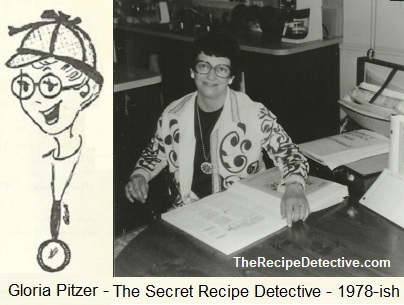
Both were among Mom’s greatest loves but she would’ve never considered them as “workouts”. She wrote in her journals, daily, about everything and anything, like she was writing to a friend. To hear Mom describe it, writing wasn’t what she did, it was simply who she was.
“A reader lives a thousand lives before he dies. The man who never reads lives only one.” – George R.R. Martin
In 2015, after getting dementia from a double stroke and grand mal seizure, it was difficult for Mom to relearn many skills we take for granted, such as crocheting (another one of her great “loves”), a talent she learned from her Mom when she was a young girl. It relaxed her. Writing came back to her easily, during her rehabilitation therapy, but not crocheting.
Mom’s journaling became limited in content because of the dementia but she continued to write something every day and re-read what she wrote, for as long as she physically could. It helped somewhat. Writing about the day’s events or current affairs is known to help keep the mind sharp and improve communication skills, productivity, and overall happiness.
They may not burn a lot of calories but reading and writing are activities that are well-known for decreasing stress and anxiety; thereby, lowering blood pressure, too. Most notably, these abilities provide knowledge, inspiration and, in many cases, entertainment.
They can likewise help build our vocabulary and the capacity to empathize, through understanding others’ perspectives. In addition, reading or writing for at least 15 to 30 minutes a day is what “they” (whoever “they” are) recommend, in order to achieve those afore mentioned benefits.
Moreover, six to ten minutes of light reading at night, before bedtime, can also relax the body, calm the nerves and, consequently, help us sleep better; which improves brain function and emotional well-being, as well as the physical health aspects.
Nowadays, knowledge is literally and instantaneously at our finger tips. There’s so much out there from which to learn. But you first have to be self-motivated and self-inspired to grab the book or the computer and open the “pages” and read, then soak it up like a sponge. Of course, these days, online, you have to be able to differentiate between what’s fact and fiction.
FROM MOM’S MEMORIES…
As seen in…
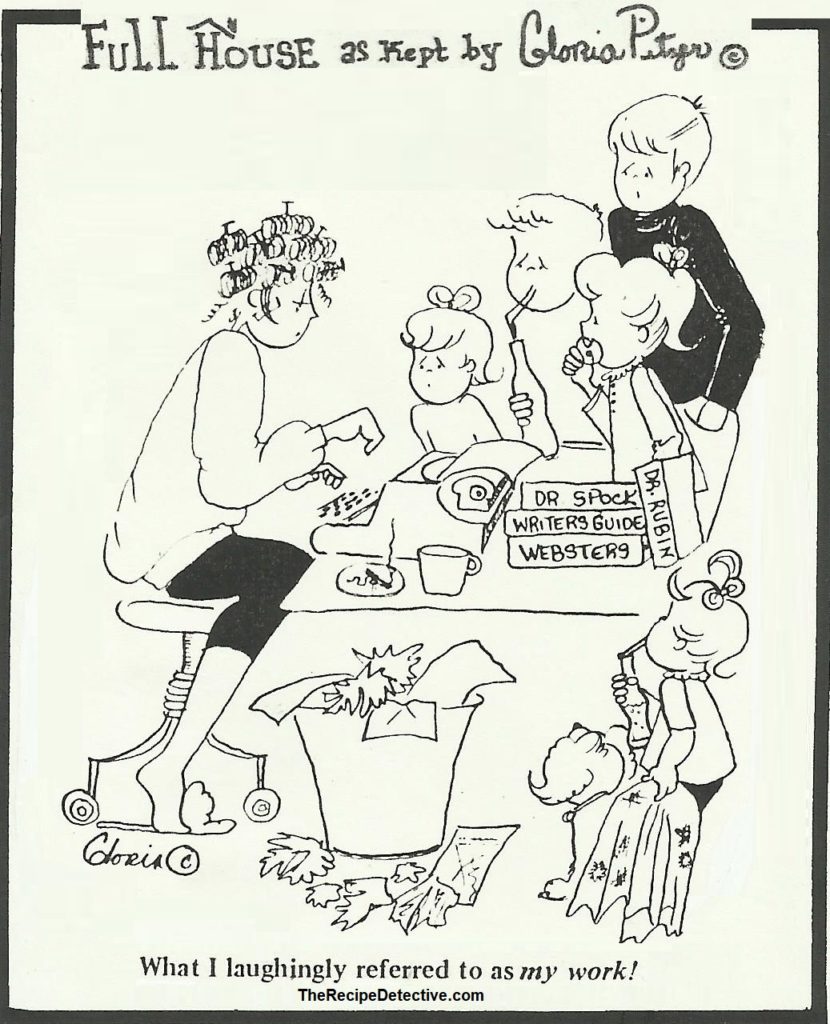
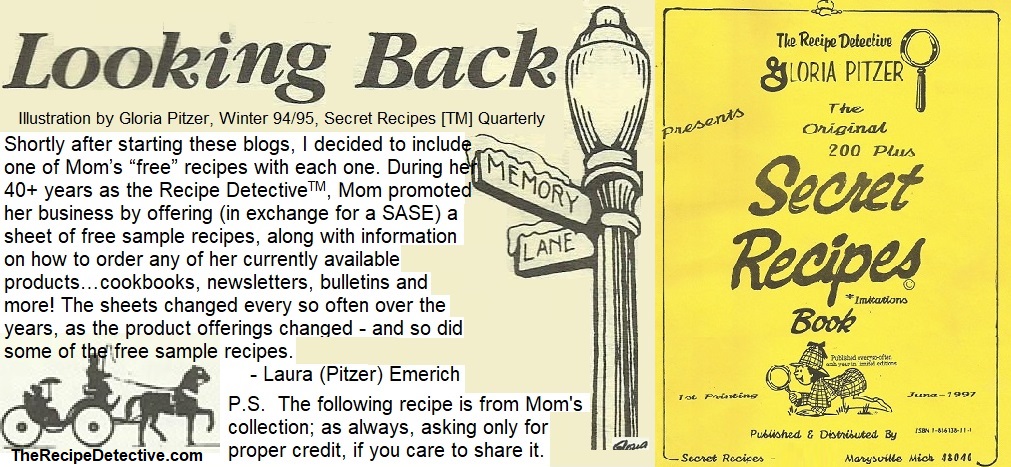
My Cup Runneth Over – And I Can’t Find My Mop (Secret RecipesTM, St. Clair, MI; Dec. 1989, p. 75)
[INSPIRATION]
WE EMBRACE THE CHALLENGE to inspire…The care and concern that an author has for their readers is part of the pleasure of presenting interesting ideas in either an entertaining way or in an informative way. I try to balance my own presentations between the two.
When I am broadcasting over the numerous radio stations around the country, sometimes around the world, I try to lift the listener to a new height of interest and enthusiasm, and I leave the serious side of nutrition to the experts, who have the medical background to support their claims.
My hope is to present my recipes in such a way that cooking is a joy and never a job! I try to present these recipes with the same concern as I do giving a gift to a special friend.
Each of our 5 children, who have grown up helping Paul and me with these recipes, have gone out into the world with this legacy of love and enthusiasm. We can only hope that they use what we have given them.
HOME LIBRARY
Did you know that only about 20% of American adults own at least one to ten books and a mere 27% have what is considered to be a small collection, with at least 11-50 books? A “budding” collection is deemed to have about 51-100 books.
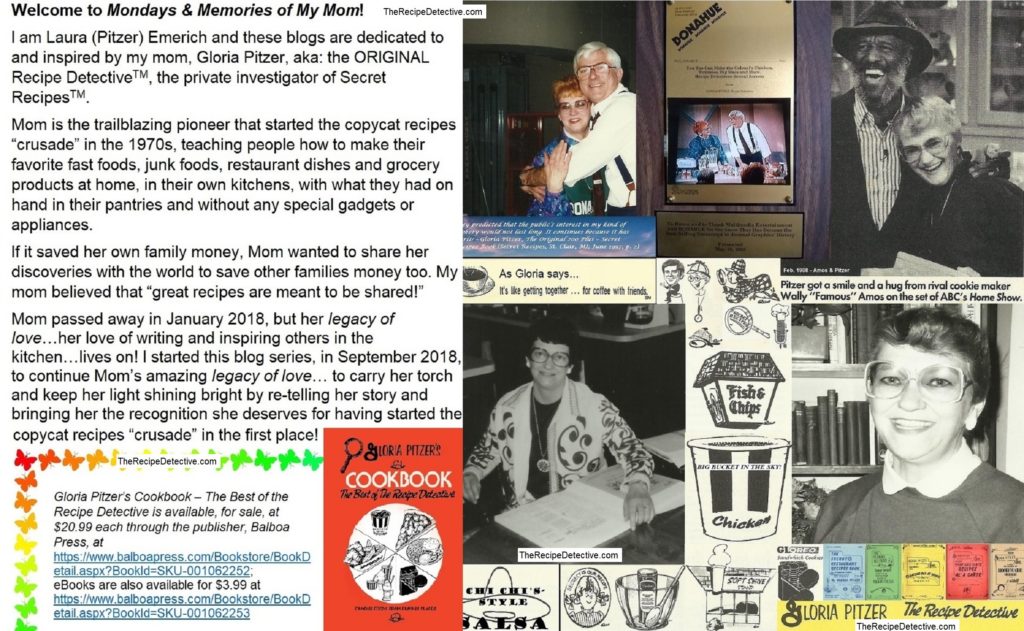
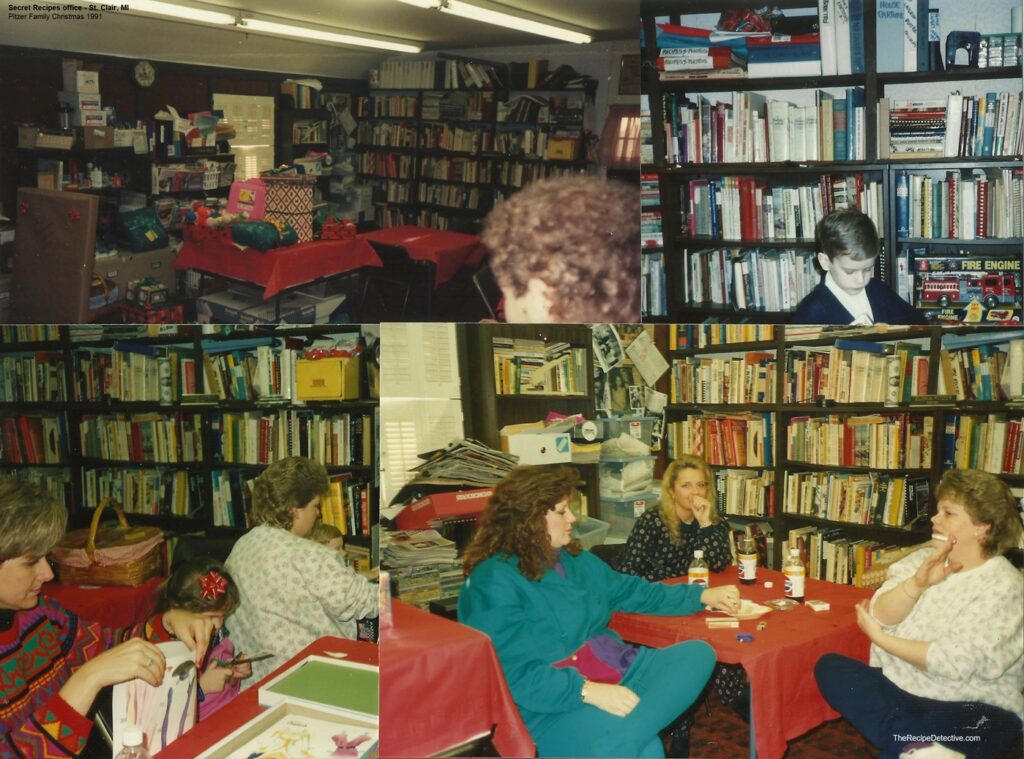
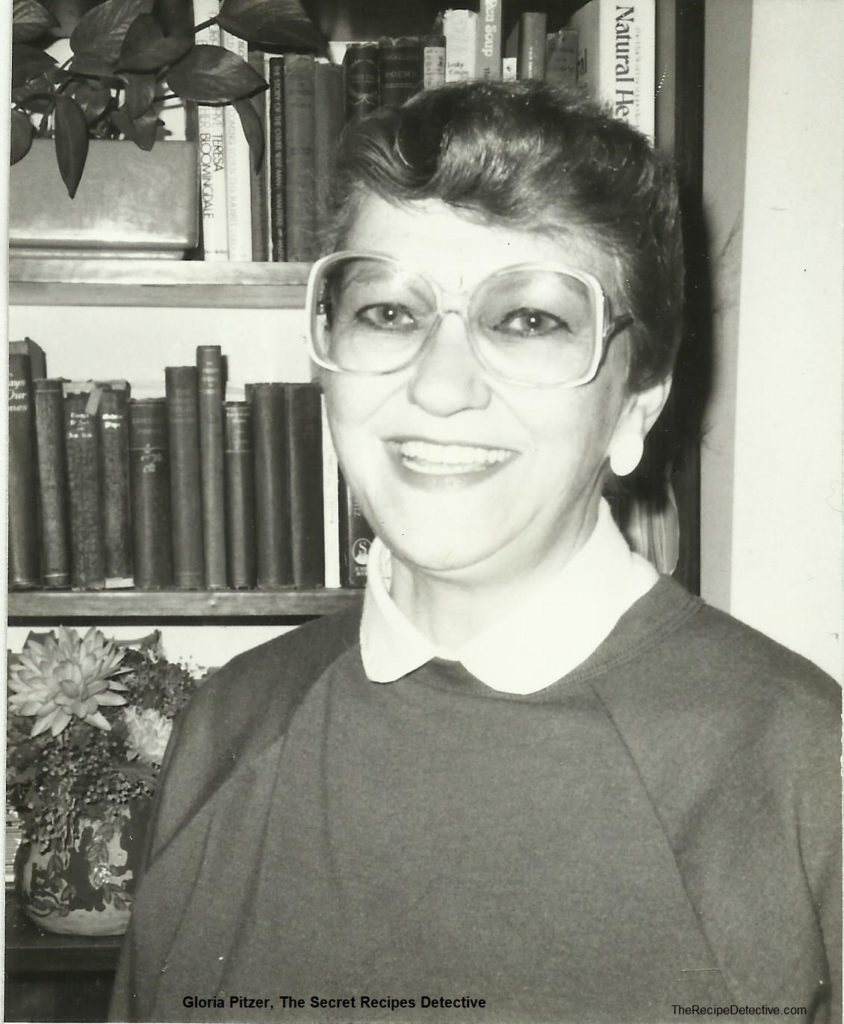
Even though there’s no official rules for what constitutes a home library, 101-500 books is plenty for a modest home library. More than 500 books is believed to be a serious collection. Mom definitely had a serious collection as you can see from the picture collage (above), which was taken in her office during one of our family’s Christmas Eve gatherings.
I love collecting books. I’ve always wanted my own home library like I’ve seen in movies and on TV shows, with wall-to-wall and floor-to-ceiling, built-in, woodgrain bookcases and a sliding ladder to access the ones that are up high and out of reach.
I recently counted how many books I’ve accumulated so far. Between those in my kitchen, den, and “reading nook”, I currently have about 400 books. Over a third of them are fiction. Almost two-thirds are for learning – about birds, gardening, astrology, astronomy, ancestry, lighthouses, Michigan, creative writing, art, calligraphy, cooking, and more.
With proper education, it’s moderately easy to learn to read a book. And, according to my dad, it’s relatively simple to write a book, too. The hardest part is selling it – though, not for Mom. I think she could have sold just about anything to which she put her mind.
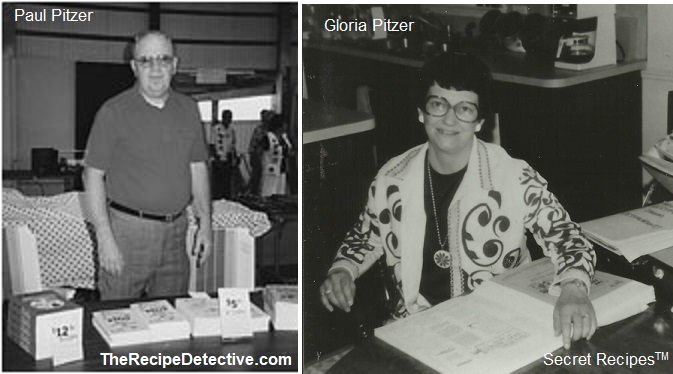
Both Mom and I aspired to become writers of books that people would want to read – the great American novel dream – but only Mom made a career from her writing. She was a natural storyteller and seller. For years, before she became the Secret RecipesTM Detective, she wrote editorials about all kinds of things that would interest homemakers like herself.
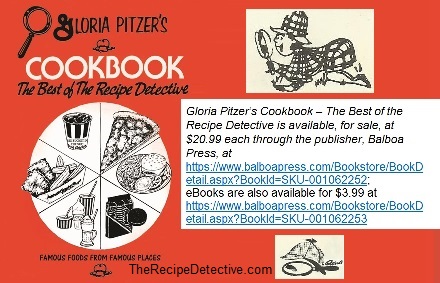
Meanwhile, my poetry still sits on handwritten pages in a couple of journals in my den, just waiting for me to put myself out there and publish them in a “real” book. I collaborated with Mom to help her re-write her favorite self-published cookbook, which took a couple of years (part-time), so we could inspire a new generation of copycat cooks – a digital generation.
We couldn’t self-publish it this time around. Together with my brother Mike, we researched several different publishing companies. After weighing all the pros and cons of each, we ended up choosing Balboa Press to re-publish it. It took a lot of time and work before it went to print in January 2018, just before Mom passed away.
BOOKWORM
For most of my life, like Mom, I was a “bookworm” – not the insect larvae that eats the paper, glue, and bindings of books – as in a passionate and avid reader, a seeker of knowledge, and a lover of books. Such people prefer to read over many other social activities and will spend a lot of time doing so, as well as studying and collecting books.
I peruse thrift stores, yard sales, and used-book stores to buy more books for my ever-growing collection. But now, with computers and the world wide web, I’ve also become an internet-worm. However, I love the feel of a hard copy book in my hands better than an e-book. I still go to my local library to borrow hard-copy books but I can also borrow digital copies.
I’m among 155 million Americans that are registered users of a public library system. Together, we average five to six visits a year. Younger generations, like Gen Z and Millennials, drive a significant share of physical visits and digital borrowing. Before we can read anything, someone needs to write it first…
WRITING GOOD STORIES
Almost anything can be learned online, if not from books. I learned, from a “Google search”, different aspects about writing a good story. The “names” have changed but were still similar to the things I learned in my high school’s creative writing class.
First, stories need an arrangement. It’s common practice to use the “Rule of 3”, which is setup, conflict, and resolution; or the more detailed “5 Cs” (character, context, conflict, climax, and closure), when developing a story.
After brainstorming and forming an outline about what to write, create a structured narrative of ideas (with a beginning, middle, and end). People, places, plot, and purpose are the four pillars (or “4 Ps”) that help form a story. Then make a rough draft from the narrative – filling in, between the ideas, with descriptive and connective dialogue.
If a story starts with a compelling “hook”, it immediately grabs the reader’s attention and interest. To keep that going to the end of the book, it’s important to also create relatable and/or captivating characters and bring the scenes to life, using vivid imagery and sensory language, empowering the reader to “see” it in their mind.
It’s also important to insert some kind of emotional appeal that makes the reader care then end the story with a memorable lesson or takeaway. However, a writer should keep in mind to avoid excessive and needless details or characters that don’t contribute to or advance the story.
Polish and revise, repeating as needed. It also helps to read your work aloud in order to catch awkward phrasing. On top of all that, writers need to remember to take breaks away, from time-to-time, to get a refreshed perspective, as well – especially during the revisions period.
WORTHWHILE
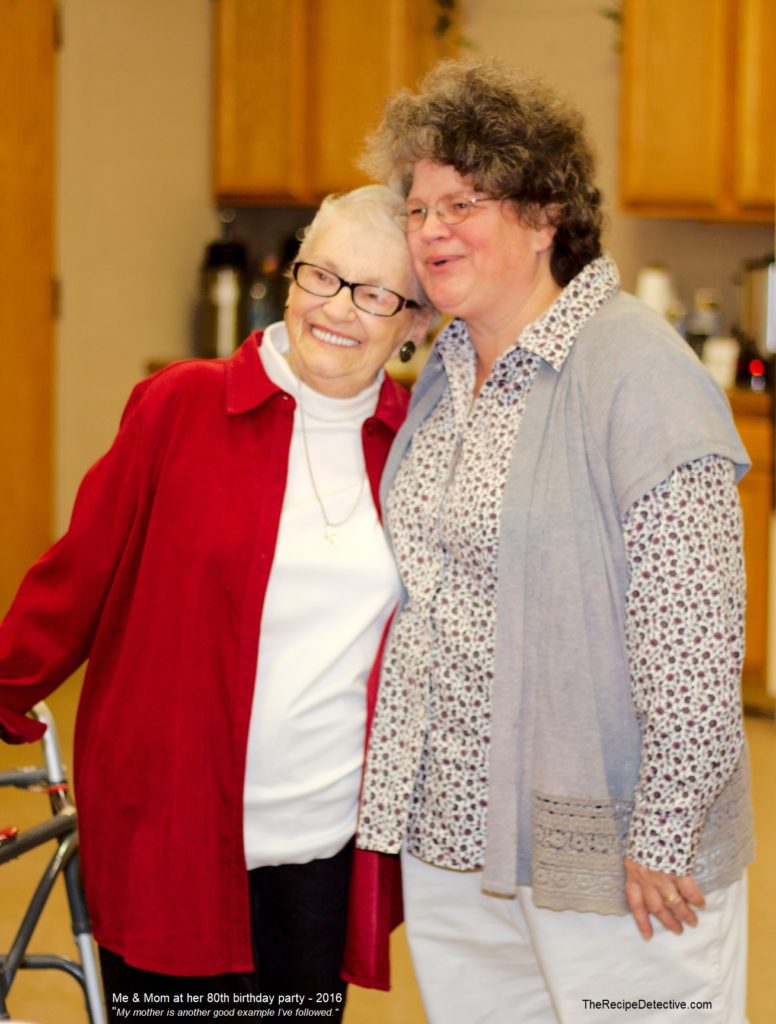
Rather than a book (although, I still dream), I write these blog posts every Monday, in honor and in memory of Mom. They educate and inspire me, as I research every subject. I can only hope that these posts do the same for you, the reader, as well. Like Mom, I love hearing from my readers, too. They often share with me their own memories of Mom.
Since I started these blog posts, almost eight years ago, writing has become very therapeutic for me, just like it always was for my mom. I’ve written many blog posts about her love for writing since she was a young girl.
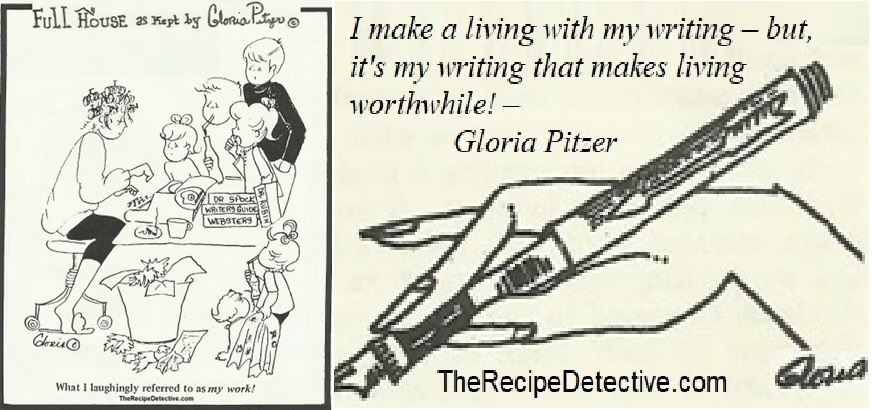
Her passion for writing bloomed into a legacy, being the Secret RecipesTM Detective – investigator of the secrets of the food industry. She loved telling everyone that she made a worthwhile living with her writing – but, for her, it was the writing that made living worthwhile.
“…We open letters every day from people all over the world, saying ‘thank you for writing your books’, ‘I feel as if I know you just from reading your books’, ‘I don’t know whether to keep up on reading or run to the kitchen and make something’ – and then I know [nothing can] keep me [away] from continuing with this work.” – Gloria Pitzer, as seen in… Gloria Pitzer’s Mixed Blessings – Recipes & Remedies (Secret RecipesTM, St. Clair, MI; March 1984, p. xv).
LAST THOUGHTS…
Thanks for visiting! I hope you’ve enjoyed reading about my memories of my mom, her memories, and other related things. If you have any questions or comments, feel free to email me at therecipedetective@outlook.com. You can also find me on Facebook: @TheRecipeDetective. I look forward to hearing from you!
IN CLOSING…
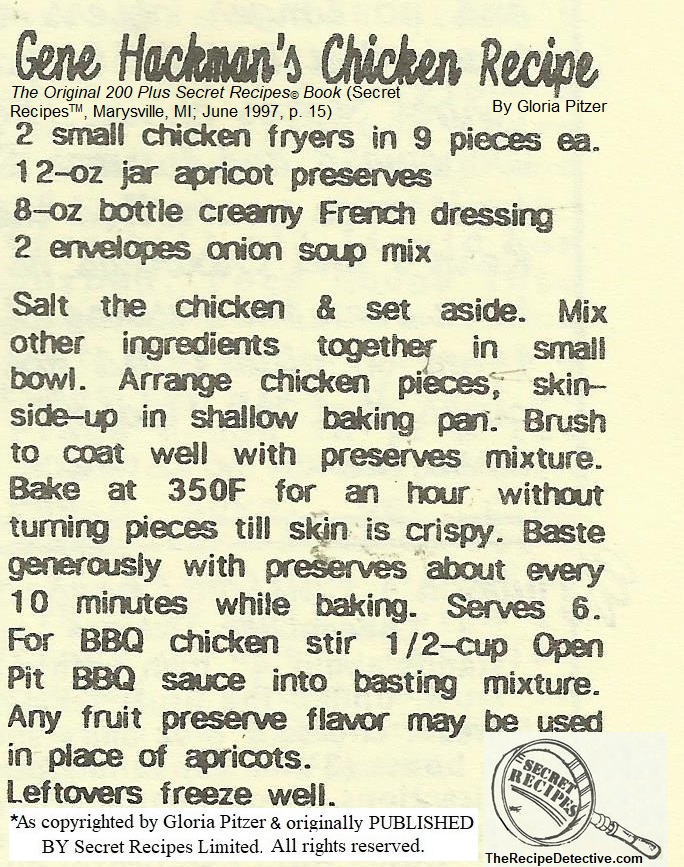
In honor of tomorrow, being National Chicken Boy Day and the start of September, which is National Chicken Month, here’s Mom’s copycat version of “Gene Hackman’s Chicken Recipe”; as seen in her self-published cookbook, The Original 200 Plus Secret Recipes© Book (Secret RecipesTM, Marysville, MI; June 1997, p. 15). Per usual, I’m asking only for proper credit if you care to re-share it.
P.S. Food-for-thought until next Monday…
Today is the last day of August, which observes… National Dog Month, Family Fun Month, Get Ready For Kindergarten Month, Happiness Happens Month, International Peace Month, National Back to School Month, National Brownies at Brunch Month, National Catfish Month, National Crayon Collection Month, National Goat Cheese Month, National Golf Month, National Panini Month, National Sandwich Month, Romance Awareness Month, and more.
Today is also… National South Carolina Day and National Trail Mix Day.

Tomorrow kicks off the month of September, which celebrates… Better Breakfast Month, Little League Month, National Americana Month, National Blueberry Popsicle Month, National Courtesy Month, National Honey Month, National Italian Cheese Month, National Mushroom Month, National Potato Month, National Rice Month, National Sewing Month, Self-Improvement Month, Whole Grains Month, and more.
September 1st is also… World Letter Writing Day and National No Rhyme (Nor Reason) Day.
Wednesday, September 2nd, is… National Blueberry Popsicle Day.
Thursday, September 3rd, is… National Welsh Rarebit Day and U.S. Bowling League Day.
September 4th is… National Spice Blend Day, National Wildlife Day, National Newspaper Carrier Day, and National Macadamia Nut Day. Plus, as the first Friday in September (for 2026), it’s also… National Lazy Mom’s Day, National Food Bank Day, National College Colors Day, and National Chianti Day.
September 5th is… National Cheese Pizza Day and National Be Late For Something Day. Plus, according to Bacon.Fandom.com (and others), as the Saturday before Labor Day (for 2026), it’s also… International Bacon Day. Incidentally, National Bacon Day is December 30th. Additionally, as the first Saturday in September (for 2026), it’s also… National Tailgating Day and National Play Outside Day (which is the first Saturday of every month).
Sunday, September 6th, is… National Coffee Ice Cream Day. Plus, as the start of the first FULL week in September (for 2026), it’s also the start of… National Waffle Week.
Have a great week!
…35 down and 17 to go.
