Happy Monday, once more. I LOVE Mondays. They’re my 52 Chances a year, in which I get to share Memories of My Mom with you.
Friday is National Retro Day. Retro refers to new things that bring out feelings of nostalgia, as they imitate or are inspired by the style, fashion, or design of things (such as patterns and colors, especially of clothing, furniture, and décor) from the semi-recent past.
The way to distinguish the difference between retro, vintage, and antique is, basically, by time of production – vintage items are typically over 20 years old but not as old as antiques, which are over 100 years old. Retro items, however, are newly made but designed to mimic something vintage or antique.
Currently, retro items are imitations of things from the latter half of the 20th century. However, people have had feelings of nostalgia for centuries and, thus, have been replicating things from their own pasts. In other words, you can come across retro replications from any era of things from their bygone days.
Mom’s recipes were often retro replications inspired by vintage dishes that she and her readers once enjoyed and couldn’t get any longer, as well as current dishes – both of which prompted her slogans for “eating out at home” and “imitating famous foods from famous places”.
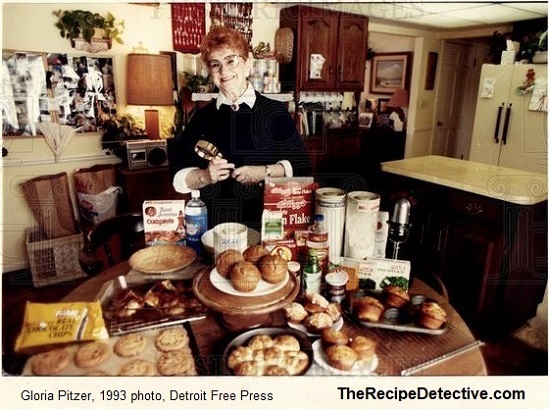
Mom never knew the ACTUAL “secret recipes” of the restaurants and food companies, whose dishes she imitated. But she could come up with her own combination of ingredients and techniques, in retro fashion, mimicking restaurant recipes of famous dishes, as well as grocery products.
She was the trailblazer for copycat cookery’s secret recipes of the food industry, as no one else was doing anything remotely like it.
Mom didn’t write recipes for the usual, ordinary things that other cookbooks offered, at that time, such as ordinary chocolate cupcakes and fried chicken. Instead, she developed and shared her SPECIAL recipes for replicating thousands of iconic foods like “Hostess Cupcakes” and the Colonel’s “Kentucky Fried Chicken”, changing their names slightly.
Mom often titled her imitations to sound similar to the original inspirations from which they were derived. For example, her fudge cupcake imitation of the Hostess product was called “Hopeless Cupcakes” and her Kentucky Fried Chicken imitation was called “Big Bucket in the Sky Chicken”.
There was a bottomless well of “secret recipe” imitation ideas and inspirations within the food industry, that Mom could tap into, from supermarket shelves to delis and cafeterias to fast food chains and restaurants, just to name a few.
In the 1970s and early 1980s, before her exposer from being on The Phil Donahue Show (1981) and before copycats started copying the ORIGINAL copycat, her self-published cookbooks and newsletter issues stood out from all the rest due to its unique subject matter, as well as its presentation and how she promoted it. Here’s her story.
FROM MOM’S MEMORIES…
As seen in…
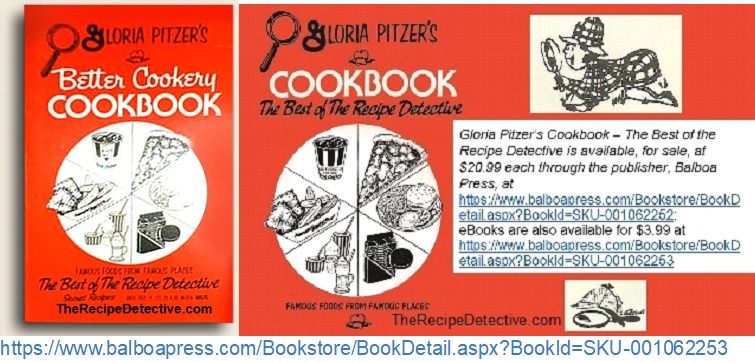
Gloria Pitzer’s Cookbook – Best Of The Recipe Detective (Balboa Press; Jan. 2018, pp. 6-7). [A revised reprint of Gloria Pitzer’s Better Cookery Cookbook (Secret RecipesTM, St. Clair, MI; May 1983, 3rd Edition).]
IT ALL STARTED WITH THE STROKE OF A PEN
DEAR FRIENDS,
I DO, WITH RECIPES, what Rich Little does with voices! Imitating the “Secret Recipes” of the food industry has been an exciting experience for me. The critics felt that “fast foods” and restaurant dishes were not worth the effort to duplicate at home, when you can just as easily buy the products already prepared!
The critics who contend that “fast foods” are “junk foods” and not good for us, have probably never prepared these foods themselves. Certainly, they have no access to the closely guarded recipes from the food companies that created these dishes, as there are only a few people… permitted the privilege of such information!
So, 99% of the critics’ speculations are based on their own opinions. To know what these dishes contained, they’d have to be better chemists than I, as I have tested over 20,000 recipes with only the finished product as my guide to determine what each contained.
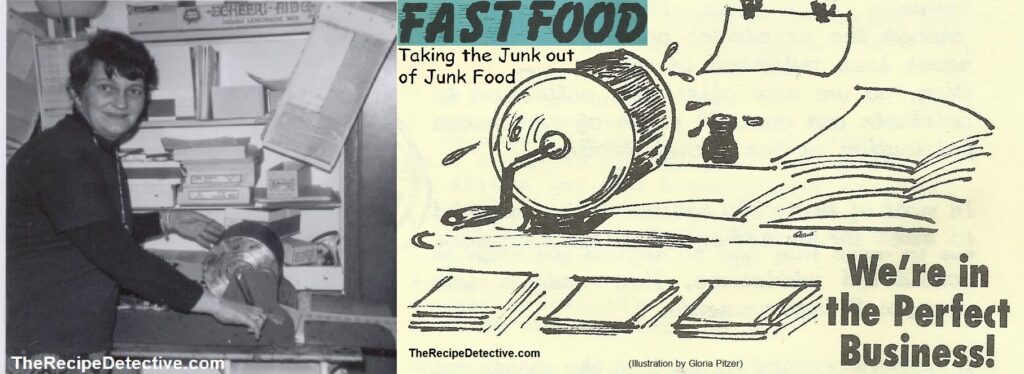
“Fast foods” are not “junk foods” unless they’re not properly prepared. Any food that is poorly prepared (and just as badly presented) is junk! Unfortunately, “fast food” has carried a reputation, by default, of containing ingredients that are “harmful” to us.
Yet, they contain the same ingredients as those foods served in the “finer” restaurants with wine stewards, linen tablecloths, candlelight, coat-check attendants, and parking valets; which separate the plastic palaces of “fast food” from the expensive dining establishments.
One “eats” at McDonald’s, but “dines” at The Four Seasons. Steak and potato or hamburger and French fries – the ingredients are practically the same. How they are prepared makes the difference!
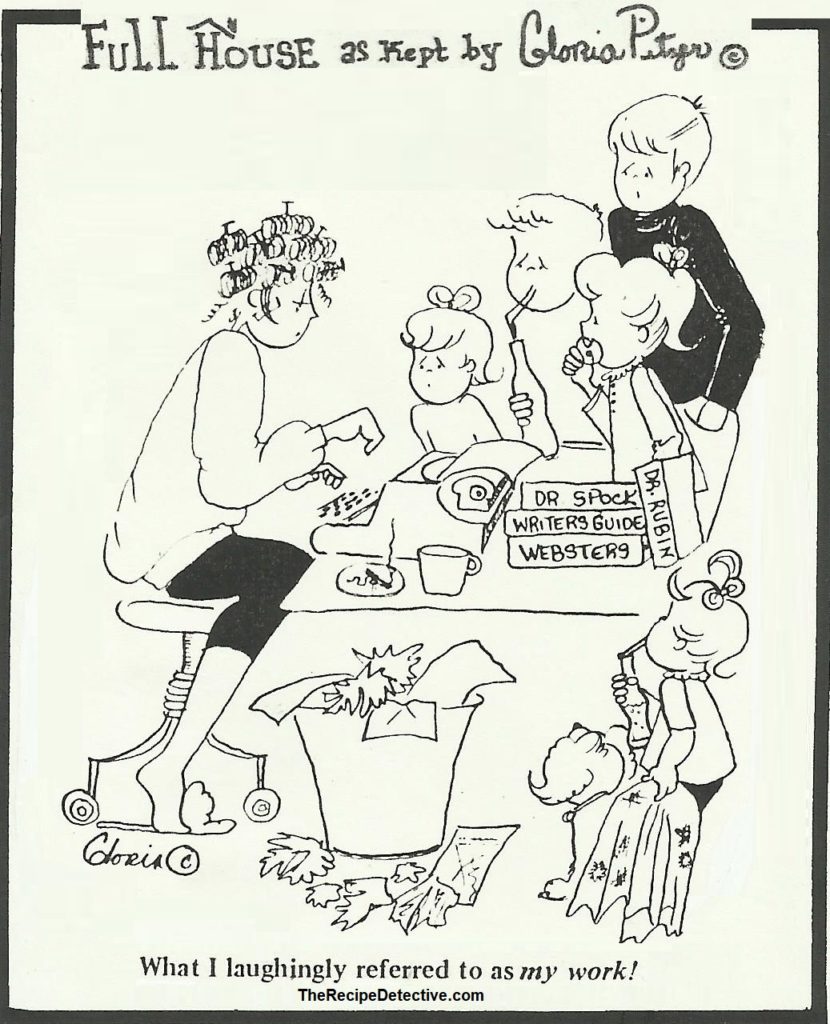
In the early 70s, I was trying to juggle marriage, motherhood, homemaking and a newspaper column syndicated through Columbia Features, when it seemed obvious to me that there wasn’t a single cookbook on the market that could help me take the monotony out of mealtime.
There was not a single recipe in the newspaper’s food section that did not smack of down-home dullness! “Okay,” they said at the newspaper I worked for, “YOU write the column on foods and recipes that YOU think would really excite the readers and make them happy!”
I did, but that didn’t make the Editors happy because it made their advertisers miserable. When I was told that I’d have to go back to monotonous meatloaf and uninteresting side-dishes that made mealtime a ritual rather than a celebration or “pick up my check”, I told them to “MAIL it to me!” I went home to start my own paper!
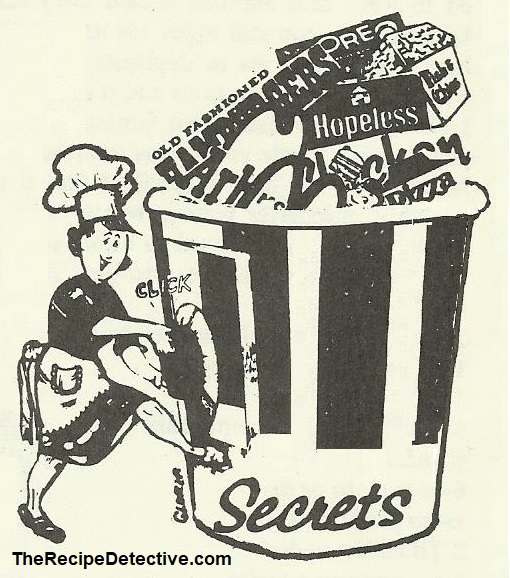
It was probably a dumb thing to do, amid an economic recession with the highest rate of unemployment I had ever experienced, but it was worth the risk. I was a dedicated writer that knew someone had to give homemakers something more than what they were being given in the colored glossy magazines…
Where a bowl of library paste could even be photographed to look appetizing! There had to be more to mealtime than lima beans and macaroni and cheese with Spam and parsley garnishes.
There also had to be more to desserts than chocolate cake recipes that came right off the cocoa can. The food industry gave us more appealing products than did the cookbooks we trusted.
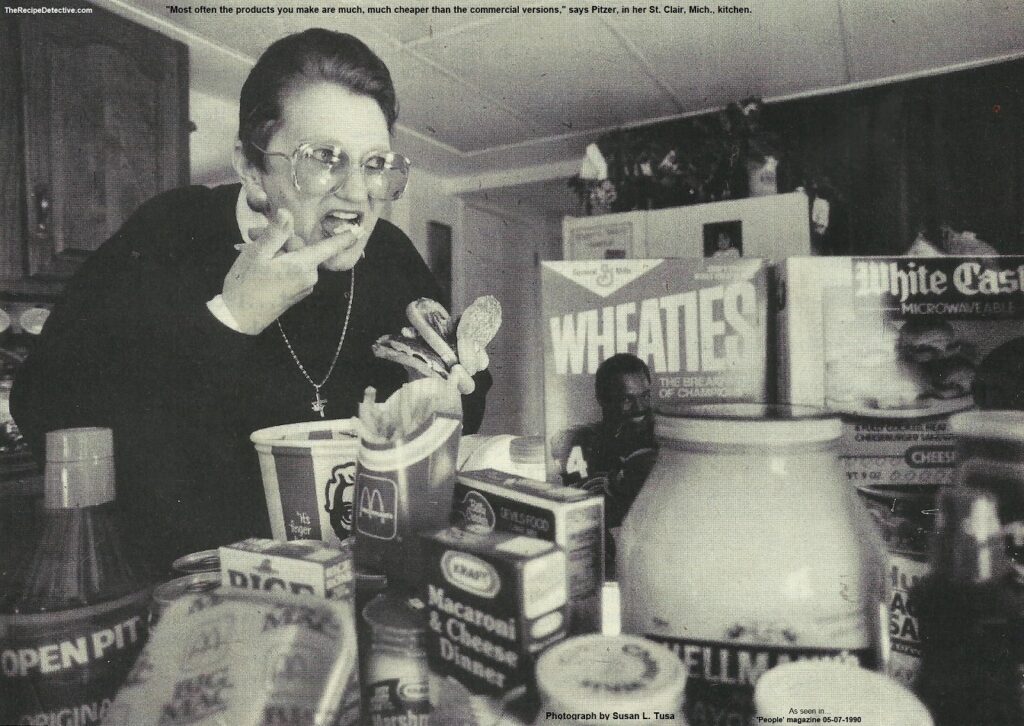
They laughed! They doubted! They even tried to take me to court when some famous food companies insisted that I stop giving away their secrets. They couldn’t believe me when I said that I did NOT know, nor did I want to know, what they put in their so-called secret recipes.
I did know that there are very few recipes that can’t be duplicated or imitated at home. And we could do them for much less than purchasing the original product. I proved… it can be and should be done!
Famous foods from famous places have intrigued good cooks for a long time – even before fast foods of the 1950’s were a curiosity. When cookbooks offer us a sampling of good foods, they seldom devote themselves to the dishes of famous restaurants.
There is speculation among the critics as to the virtues of re-creating, at home, the foods that you can buy “eating out”, such as the fast food fares of the popular franchise restaurants. To each, his own! Who would want to imitate “fast food” at home?

I found that over a million people who saw me demonstrate replicating some famous fast food products on The Phil Donahue Show (July 7, 1981) DID – and their letters poured in at a rate of over 15,000 a day for months on end!
And while I’ve investigated the recipes, dishes, and cooking techniques of “fine” dining rooms around the world, I received more requests from people who wanted to know how to make things like McDonald’s Special Sauce or General Foods Shake-N-Bake coating mix or White Castle’s hamburgers than… Club 21’s Coq Au Vin.
A cookbook should be as exciting as a good mystery! Most are drably written by well-meaning cooks who might know how to put together a good dish but know nothing about making the reader feel as if they’re right there, in the kitchen with them, peeling, cutting, chopping, stirring, sifting and all the other things… [for] preparing food.

Several iconic restaurant chains, whose dishes Mom imitated, have vanished completely or nearly vanished, such as…
Chicken-In-The-Rough – founded by Beverly and Rubye Osborne, in 1936, in Oklahoma City. There were 250 licensed franchise locations by 1950. The chain began shrinking in the 1970s due to sanitation issues cited by the NSF over their patented skillets.
Only two other cities, besides Oklahoma City, still serve “Chicken in the Rough” today – Port Huron, MI (about 20 minutes north of where I live) and in Sarnia, Ontario (Canada), just east of Port Huron, across the St. Clair River. Mom called her retro restaurant recipe “Chicken-In-The-Gruff”. Pictured below is her story about the original.

Howard Johnson’s Restaurant – founded by Howard Deering Johnson in 1925 – began as an ice cream and soda fountain shop, near Boston. It was very popular and, in 1929, grew into a full-service family restaurant, with a second location in Cape Cod.
It was most famous for its signature orange roof and cupola design, as well as its famous 28 flavors of creamy, “homemade” ice cream, GRILLED hot dogs, and fried clam strips. The company evolved even more in the 1950s, by opening a chain of motels, each near or featuring their famous restaurant and creamery.
Howard Johnson’s became one of the biggest restaurant chains in the country. At its peak in the 1960s and 1970s, it operated more than 500 motor lodges alongside over a thousand restaurants. Mom wrote about their rise to fame in her cookbook, Eating Out at Home (National Home News, St. Clair, MI; September 1978, p. 16).

However, corporate changes came after the founder’s death in 1972 and the brand eventually suffered from competition, changing tastes, and mismanagement. They failed to keep up with the consumers’ shift toward faster service, allowing competitors to pull market shares away from them. As a result, the corporation was sold several times, starting in 1979.
But since 2006, the brand has been owned by Wyndham Hotels & Resorts. Mom developed and published more than two dozen of her own retro restaurant recipes to imitate their famous ice cream, sherbets, Boston Brown Bread, Clam Chowder, and more. She changed the name on her versions to Flowered John’s Sons.
Mom also developed numerous retro restaurant recipe imitations for famous dishes from other famous places – national and Detroit area dining rooms and cafeterias that are no longer around and yearningly missed – like J.L. Hudson’s, Woolworth’s, K-Mart, Sanders’, Hedge’s Wigwam, and an abundance more.

AGAIN, MORE FROM MOM’S MEMORIES…
Eating Out at Home Cookbook (Secret RecipesTM, St. Clair, MI; Sept. 1978; p. 2)
[RETRO RESTAURANT RECIPES]
YOU DON’T HAVE TO know exactly how the original dish was prepared by the commercial food chains. All you need is a basic recipe to which you will add that ‘special seasoning’ or that ‘secret method of preparation’ that sets one famous secret recipe apart from those similar to it…
When I work to duplicate a recipe so that the finished product is as good as (if not better than) a famous restaurant dish, I begin by asking myself a series of questions: I want to know what color the finished dish has…[and] was it achieved by baking, frying or refrigeration?…
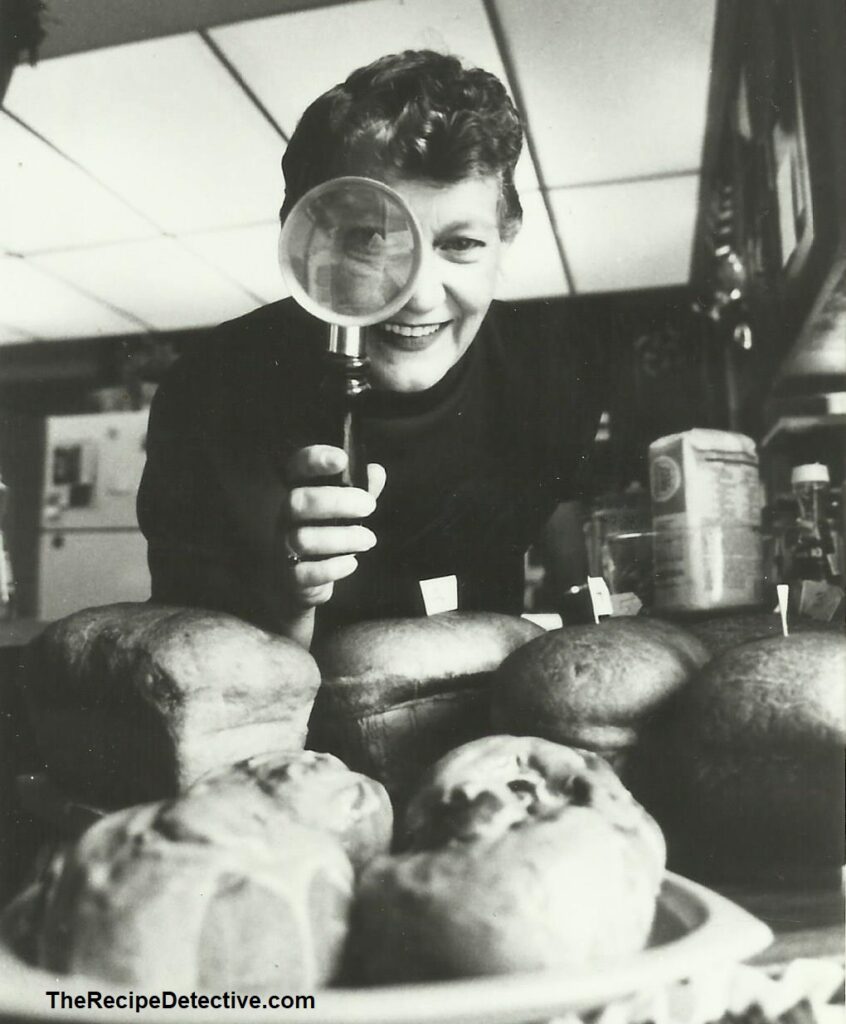
What specific flavors can I identify? …And about how much of each may have been used?…Similar tests are used in chemistry…[to]…break down the components of an unknown substance and try to rebuild it.
So the cook must work like a chemist (and not like a gourmet, who, most of the time, never uses a recipe – but, rather, creates one). The most remarkable part of the duplication of famous recipes is that you can accept the challenge to ‘try’ to match their [dish or product].
Sometimes, you will be successful. Sometimes you will fail in the attempt. But, at least, it can be done, and it certainly takes the monotony out of mealtime when, for reasons of financial inadequacy, we cannot always eat out. Even if we could afford to eat out all or most of our meals… wouldn’t that become monotonous in time?
LAST THOUGHTS…
Thanks for visiting! I hope you’ve enjoyed reading about my memories of my mom, her memories, and other related things. If you have any questions or comments, feel free to email me at therecipedetective@outlook.com. You can also find me on Facebook: @TheRecipeDetective.

IN CLOSING…
In honor of February, being National Hot Breakfast Month, here’s Mom’s secret recipe for “Pumpkin Nut Waffles”; as seen in her self-published newsletter… Gloria Pitzer’s Monthly Cookbook of Secret Recipes (Secret RecipesTM, St. Clair, MI; October 1981, p. 5). As always, I’m asking only for proper credit if you care to re-share it.

P.S. Food-for-thought until next Monday…
The month of February also celebrates… National Fasting February, Black History Month, National Canned Food Month, National Creative Romance Month, National Great American Pies Month, National Bake for Family Fun Month, National Bird Feeding Month, National Cherry Month, National Grapefruit Month, National Library Lover’s Month, National Snack Food Month, and National Weddings Month, among other things.

Today is also… National Banana Bread Day and National Dog Biscuit Day. Plus, as the last Monday in February (for 2026), it’s also the start of… National Eating Disorders Awareness Week.
Tomorrow is… National Tortilla Chip Day.
Wednesday, February 25th, is… National Chocolate Covered Nut Day and National Clam Chowder Day.
February 26th is… National Pistachio Day and National Tell a Fairy Tale Day. Plus, as the fourth Thursday in February (for 2026), it’s also… National Chili Day. Additionally, as the last Thursday in February (for 2026), it’s also… National Toast Day.
Friday, February 27th, is… National Strawberry Day.
Saturday, February 28th, is… National Chocolate Souffle Day and National Floral Design Day.
Sunday is the start of March, which celebrates… Irish-American Heritage Month, National Caffeine Awareness Month, National Celery Month, National Craft Month, National Flour Month, National Sauce Month, National Women’s History Month, and more.
Unofficially, it’s Maple Sugaring Month. It’s not a national or federal holiday but making maple syrup is a big event in Michigan, as well as in the rest of the northeastern U.S. and its Canadian neighbors. See Michigan State University’s Extension’s website, for March is Maple Syrup Season in Michigan.
March 1st is also… National Dadgum That’s Good Day, National Fruit Compote Day, National Minnesota Day, National Peanut Butter Lover’s Day, National Pig Day, and World Compliment Day. Plus, as the start of the first week in March (for 2026), it’s also the start of… Words Matter Week and Read an E-Book Week, as well as National Procrastination Week, which is the first two weeks of March – or whenever it’s convenient.
Have a great week and check out Mom’s Crafts Tab, on Sunday, as March is also… National Craft Month.

…8 down, 44 to go!
